The dial
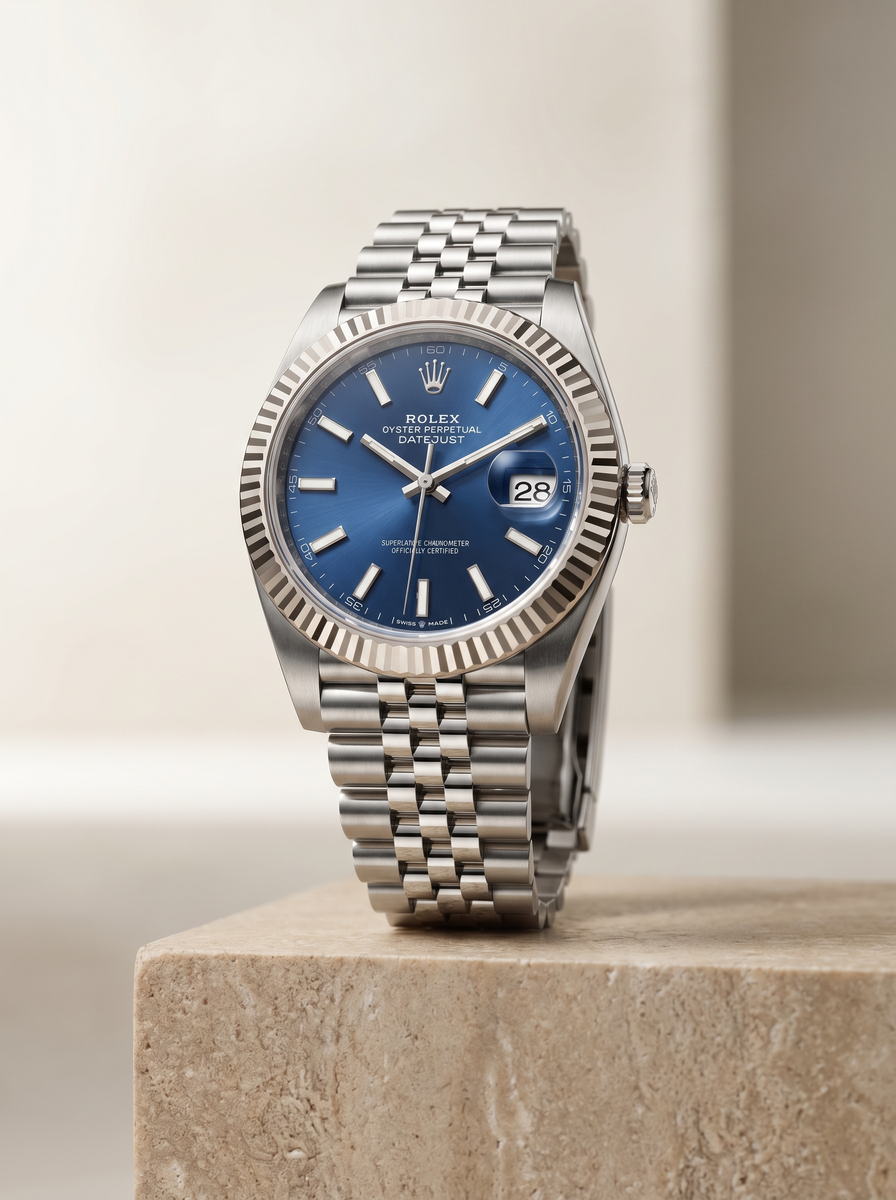
Sunray blue with applied hour markers in white gold — legible in any light, and rarely the same colour twice in a day.
Rolex · Oyster Perpetual
The standard the others are compared to.
Inquire about this reference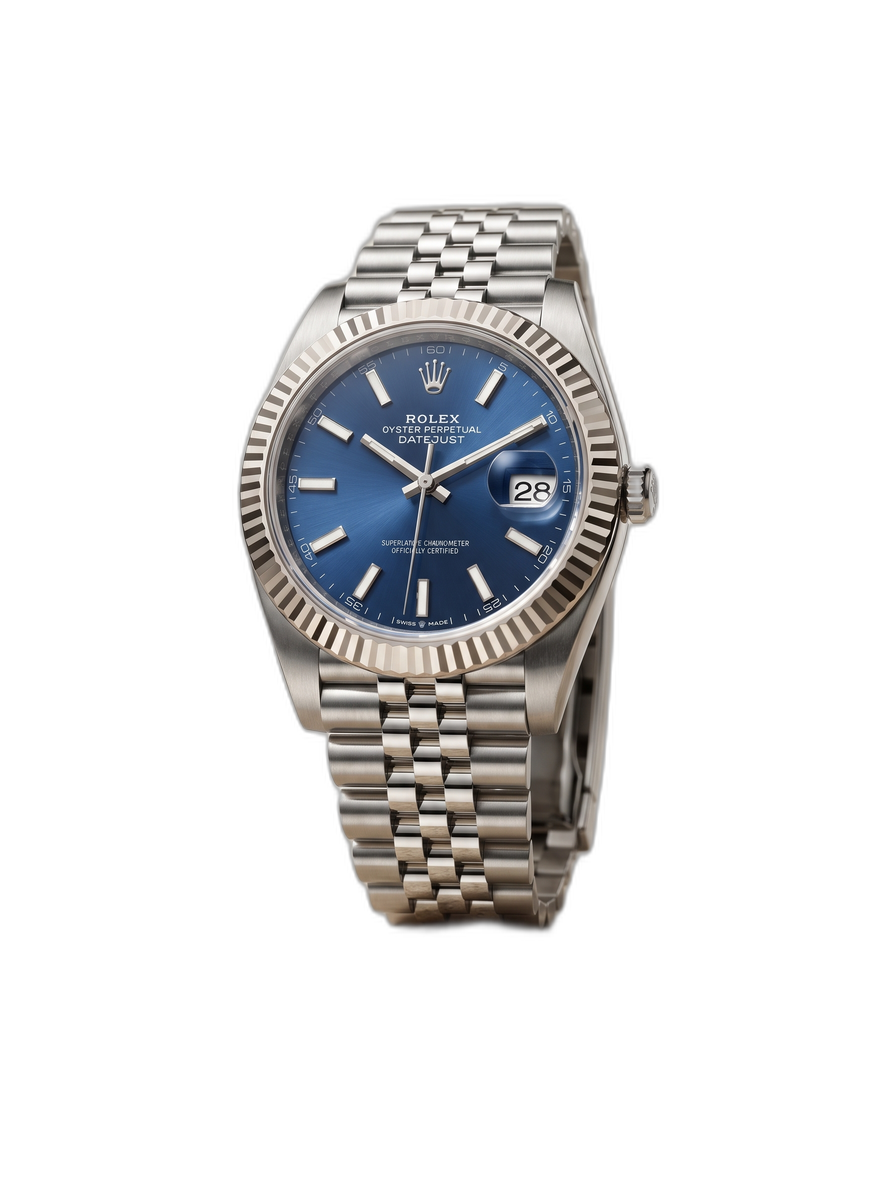
Oystersteel with a white gold fluted bezel, a bright blue dial and the Jubilee bracelet — the Rolex that taught everyone what a Rolex looks like.
The reference
The Datejust arrived in 1945 as the first self-winding chronometer wristwatch to show the date in a window. Almost everything the wider world pictures when it pictures a wristwatch traces back to it.
This is the 126334: a 41 mm Oystersteel case closed by an 18 ct white gold fluted bezel, and a bright blue dial that shifts from near-navy to something almost luminous depending on where you are standing.
The Jubilee bracelet — five-piece links, made for the brand’s fortieth anniversary — softens it enough for a shirt cuff, and the calibre 3235 underneath gives roughly seventy hours. It is the least demonstrative watch here, and the hardest to argue with.
Inquire about this referenceSunray blue with applied hour markers in white gold — legible in any light, and rarely the same colour twice in a day.
The fluted bezel in 18 ct white gold, originally a functional means of screwing the case down, kept because nothing else reads quite like it.
Calibre 3235 with the Chronergy escapement and ~70h reserve. Certified Superlative Chronometer.
“Everything else is a variation. This is the theme.”
Specification
The collection
Private inquiry